![Comments on Recent Cases: April 2021]()
This month, the American Bar Association Magazine published two of my articles about recent decisions. One was a federal appellate decision about employment discrimination and the other was a Texas Supreme Court case about the transfer of liability in asset purchases.
Read More
![Arbitration]()
There are several reasons why parties may choose arbitration over litigation. One reason is efficiency: arbitrations tend to move faster than court proceedings. This is because arbitrators often have lighter caseloads than judges and because they have the flexibility to skip various formalities. Also arbitration usually does not permit appeals, which saves the parties the costs of an appeal.
Read More
![Litigation in India]()
According to the Constitution of India, unless the Parliament by law provides otherwise, all proceedings before the Supreme Court and in every High Court shall be conducted in English. In some exceptional cases where some other language is used during the proceeding in a High Court, the judgment in any event must be delivered in English.
Read More
![Cross Examination at Trial]()
Sometimes during cross-examination, things don’t go as planned. The witness may give a bad answer or the judge may cut off a line of questioning even though the lawyer really wanted to continue it. In those events, a lawyer is usually best served by remaining calm. Acting like these are huge losses may communicate to others that even the lawyer thinks their case is in bad shape. And while those losses are scary in the moment, a trial often has numerous opportunities for each side to make its case.
Read More
![Serving the Summons]()
Corporate defendants may automatically designate the state government its agent for service of process (or may affirmatively designate some third party to be an agent). In those cases, plaintiffs often may properly serve a defendant by delivering or mailing a complaint to the agent instead of to the company itself.
Read More
![Comments on Recent Cases: March 2021]()
Parties frequently expect more from contractors than what their contract explicitly requires. Often they believe that the contract is a formality and the real agreement comes from their pre-contract discussions or common sense. This is not always the case.
Read More
![Representations and Warranties]()
Many contracts have “indemnification” provisions, that state exactly what a defendant needs to do if a representation is false. For example, the provision may state that the defendant is only responsible for a certain amount of damages or that the plaintiff needs to follow a specific procedure before it can bring a lawsuit.
Read More
![The Convention on Contracts for the International Sale of Goods]()
Parties can determine whether the CISG is helpful for them or not based on whether they prefer its terms over the ones found in another applicable law. But putting those substantive differences aside, I believe that there is a significant benefit to the CISG, and a significant drawback.
Read More
![Litigation in Jewish Rabbinical Courts]()
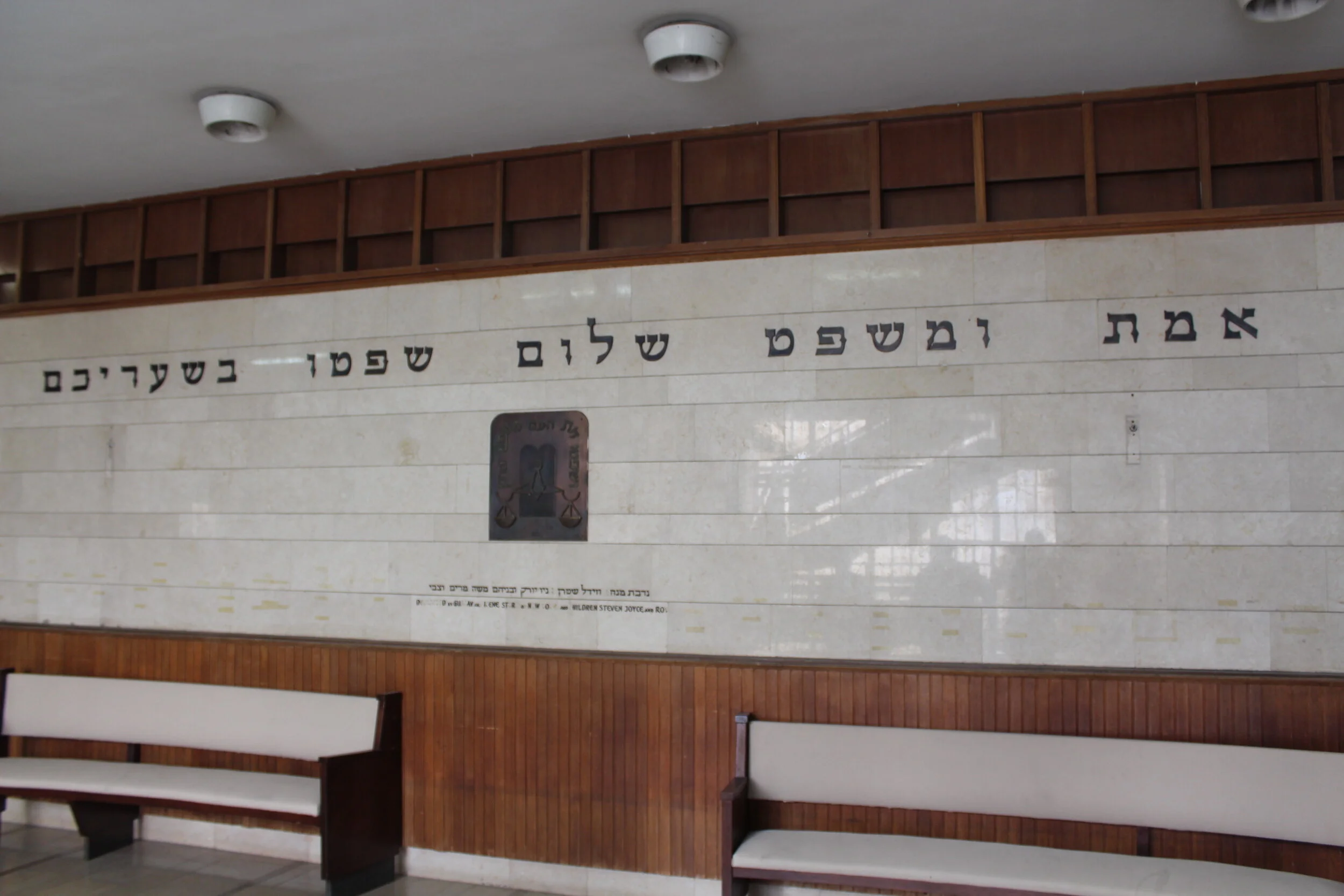
In some commercial cases, like employment cases with schools, our rabbis’ familiarity with the culture is important. And there are many situations in disputes where pure Jewish law applies and Beth Din judges have the competence to decide that in a way that secular courts don’t.
Read More
![Trial Exhibit Lists]()
The process for making an exhibit list often begins several weeks before a “pretrial conference” with the judge to discuss the trial. Often the judge’s rules or the court’s rules will instruct the parties to exchange proposed lists of exhibits. By exchanging these lists before the conference, the parties can identify the subjects of agreement ahead of time and then present their disagreements to the judge at the conference.
Read More
![Comments on Recent Cases: February 2021]()
People frequently sign non-disclosure agreements, promising to keep certain information confidential. Those agreements may not, however, prohibit a signatory from using that confidential information in a lawsuit. But to do so, the signatory may have to ask a judge’s permission to disclose the information privately to the court.
Read More
![I Don’t Know]()
The focus of a litigator’s practice is often not to advise clients how to comply with the law in the future, but whether an action in the past violated a legal obligation. And in many situations, virtually no litigator can say with confidence how the law applies to a dispute without a detailed study of various contracts and laws that govern the relationships between the relevant parties.
Read More