International Arbitration
My work on this blog led me to Muhammad Zia-Ul-Haq, the publisher of two legal journals in Pakistan, Trends in Intellectual Property Research and Legal Research & Analysis. He connected me to Claudio Finkelstein, a Brazilian lawyer and arbitrator, who was kind enough to speak with me about international arbitration.
International arbitration is a fascinating subject because it involves high-stakes commercial disputes without a lot of the theatrics people associate with courtroom litigation. Big firms handle these cases, and they often involve huge sums of money and cross-border issues. So I was interested to learn more.
Why should you continue reading this post about international arbitration?
You read my interview with a Brazilian litigator but would like more interviews with Brazilians.
You read my post about arbitration but wanted to hear from someone who made the subject their focus.
You wanted to read about courtroom drama, but you signed an arbitration agreement, so you have to read this post instead.

Cláudio Finkelstein
Claudio Finkelstein is a Brazilian lawyer, professor, and arbitrator. This interview was lightly edited.
Can you tell me about the subject matter of the disputes you generally handle in your international arbitration practice?
Most cases are commercial disputes, and currently a number of cases stem from corruption in large Brazilian companies defrauding foreign investors. Sitting as arbitrator, I deal with commercial contracts, corporate and international trade matters.
What type of clients do you generally represent in disputes?
In general, those are mid- to large-sized companies and stockholders of Brazilian companies such as banks, investment funds and institutional investors.
Besides Microsoft Office, what software do you use in your practice?
Adobe software.
What books and websites do you use for legal research?
Most search engines (including artificial intelligence ones), Arbipedia, Kluwer on-line as well as whichever database my assistants use. I have a large library of my own, but lately I am reading more and more loose articles.
What are some examples of international arbitration forums where you hear cases?
I am in the arbitrator’s roster of most Brazilian arbitration institutions with nearly all cases in Sao Paulo. Overseas, I have worked at the ICC in Paris, ICDR in New York, and the Hong Kong International Arbitration Center in China.
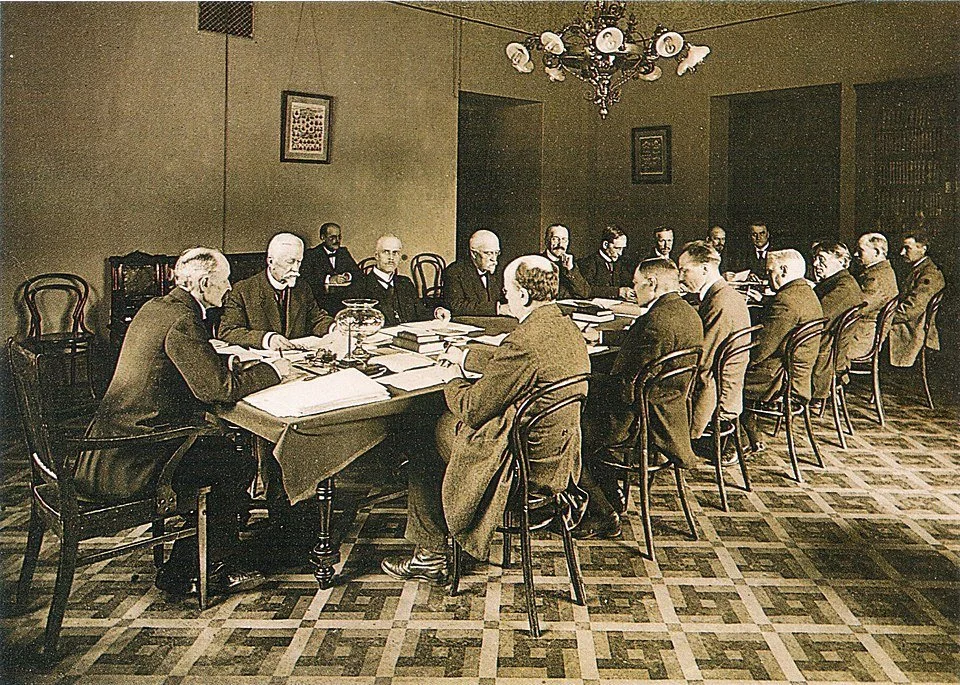
Finland Parliament’s Constitutional Committee in the House of Estates in 1918. Image credit: https://en.wikipedia.org/wiki/Committee#/media/File:Perustuslakivaliokunta_1918.jpg
Do parties file pleadings electronically in arbitration? Or must you they send paper copies?
Most institutions have their proprietary systems and nearly all work in arbitration is handled electronically.
Generally speaking, how many pages are the complaints or initial pleadings you see in your work?
In Brazilian practice, pleadings are quite lengthy. They can be 100 pages or more, but recently a number of tribunals are limiting the number of pages, ideally around 50 pages.
Are the arbitration filings and proceedings typically in English or other languages?
With tribunals sitting in Brazil, the language is usually Portuguese. Overseas, it's usually in English. I have handled as arbitrator a number of cases sitting in Brazil with procedure entirely held in English.
Generally speaking, how long does it take for a case to go from initial statement of claim to an award? Complaint to judgment?
I'm currently dealing with complex cases lasting from 3 to 5 years. However, ordinary claims are finished within 18 months.
How often do parties obey the award and how often do you see parties need to confirm the award in a local court to collect assets?
As arbitrator I'm not necessarily involved nor notified of the outcome but my feeling is that nearly half of the cases end up in court. As counsel, nearly 80% of the cases I handle end up in Court. Sadly the institutions do not follow-up on it.
How often do you see parties seek to vacate awards in court?
Nearly every award that ends up in court is an attempt to vacate it. Only a handful of cases are actually vacated.
Generally speaking, how is evidence exchanged between the parties before the hearing commences? Do you get to interview the opposing witnesses before the hearing?
There is no such thing as discovery for arbitration, so all evidence is produced at or in arbitration.
There are a few cases of procedures for the independent production of evidence to be used in a forthcoming arbitration, which are not usual in a civil law jurisdiction. Documentary evidence is filed in the case docket. In case the tribunal grants document production, depending on what's produced, it's for the tribunal's eyes only, it's blackmarked, or it’s filed for all access.
We can only hear beforehand witnesses that we appoint in preparation for the hearing.
I have never heard of a case in which we were able to depose opposing party witnesses or legal representatives.
Do you believe that arbitration has a particular strength for resolving commercial disputes?
Many commentators affirm that arbitration is the natural forum for commercial international trade disputes, and I tend to agree, as parties and counsel usually do not feel comfortable representing their interests in the opposing parties’ judicial system.
We also have to bear in mind that there is no such thing as an international judiciary, as in a court with jurisdiction for all cases no matter what the domicile or nationality of the parties are. The fact that we can choose the applicable law and procedure in addition to being able to appoint as arbitrator people we trust, versed in the subject matter under the dispute and that the law and practices of international trade are properly understood and handled is another advantage.
From a Brazilian viewpoint, I can affirm that most foreigners are afraid of the Brazilian Judiciary, for many reasons.
How about a weakness?
Needless to say that, arbitration, it's a human endeavor with all the faults natural to men …
How often do you participate in arbitration proceedings in person and how often does everything take place virtually?
During the high season it may be one or two times a week.
When you are there, what is it like? Do you need to wear a special robe or wig?
In the last three years, I had on average five hearings in person as opposed to 20 online hearings, including signature of the terms of reference. In a number of less complex cases, there is no need for a hearing and the tribunal moves straight for the issuance of the award.