Litigation in Lebanon
People have been living in Lebanon for over seven thousand years. It is home to Muslims and Christians, as well as leaders in trade and culture. And so obviously it has been home to some disputes. I have always wanted to visit, both to enjoy some kibbe and arak, but also to learn how litigators there help people resolve disputes. I may not get to go this year, but I recently enjoyed the next best thing, getting to speak with Mohamad Al Ayouby, the Managing Partner of Ayoubi Law Firm in Beirut, was kind enough to let me interview him about what litigation is like in his country.
Why should you continue reading this post about litigation in Lebanon?
You’ve regaled friends with the virtues of Bekaa Valley wineries for years.
You know your A, B, C’s and want to hear more about the country where our alphabet was born.
You want to learn how to say “robe” in Arabic.
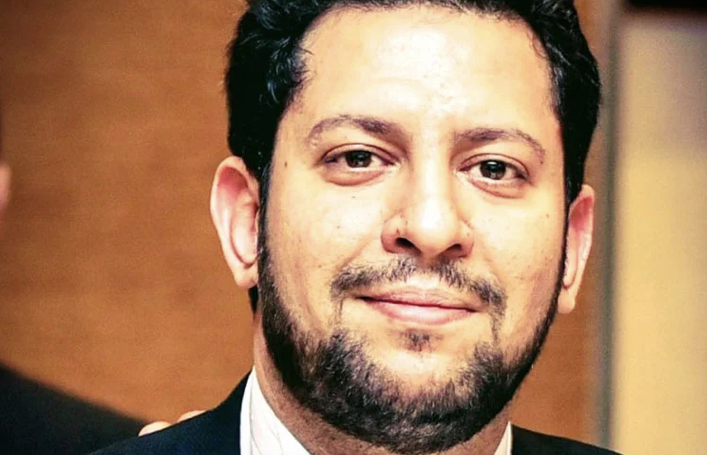
Mohamad Al Ayoubi is also Founder & CEO of iHOPE, an organization based in Tripoli that works to reunite families dealing with International Parental Child Abduction (IPCA). This interview was lightly edited.
Can you tell me about the kinds of disputes you handle in your legal practice?
Here in Lebanon, we have six types of companies, such as limited liability companies, or SRLs. In my law practice, we form companies and handle their litigation. This litigation includes disputes between majority and minority owners. And we collect amounts due to companies.
What type of clients do you generally represent in disputes?
My general law practice represents startups and also big businesses. I help clients with whatever they need.
To be a lawyer in Lebanon, you need to take an exam, and after that, you need to spend three years in internships (a "stage"), and after those three years, you can be a full-capacity lawyer. During my internships, I worked with banks, including two major banks. I handled loans where debtors stopped paying. Those typically involved loans for houses and cars. My master's thesis was on banking. Specifically, I wrote about a bank's responsibility to draft credit documents.
After that, I worked for a little on a startup business, and I tried to make its contracts for buying, selling, and trading goods.
Besides Microsoft Office, what software do you use in your practice?
There's AI software, like Claude and Perplexity. They are very good, but the AI models that focus on the law still need more time to become useful.
I don't need software to record the time I spend on matters. This is because, while attorneys in France or the US bill by the hour, the custom in Lebanon is to take flat fees for the whole matter.
I am also using a new app called Haqq. It means "right," and it automates drafting and manages cases. It even gives clients a tracking link. A trainee in my office is learning it as well, and in 2026, we will use it more.
What books and websites do you use for legal research?
I am old fashioned; I still use books. There are 2,000 books in my office. Each room has between 300-500 books.
You can't rely on the references AI provides. There are so many cases from the USA in which lawyers got in trouble for AI research, so I don't depend on web research alone, though I may search some seminal cases online. There is no LexisNexis or Westlaw in Lebanon, but there have been some initiatives by organizations to publish material online. For example, the bar in Beirut made a site. It does not work 100% perfectly, and there is always a lack of information.
One book series I use a lot is the civil law. There are many writers who write about it, especially since the law in Lebanon was taken from the French. So I review the Encyclopedia of Civil Law in France, which volumes I update [in our library] every three to four years.
There are many strong writers and judges. For civil law, some leading writers are Judge Atef Al Naqib and Mustafa Awagi. For penal law, one leading writer is Judge Samir Alia. An important publisher is SADER; they publish all the major decisions and have many other judicial papers.
Do you electronically file pleadings with the court? Or must you send paper copies to the courthouse?
Up to now, lawyers make no submissions electronically. It is 100% paperwork.
The Finance Ministry has started to accept electronic filings, but for now, courts are all paper. During the coronavirus pandemic, a few courts accepted filings for a few months by email if it was an urgent matter, but after the pandemic subsided, they were all back to paper. Electronic filings are more common in places like Dubai or Saudi Arabia.
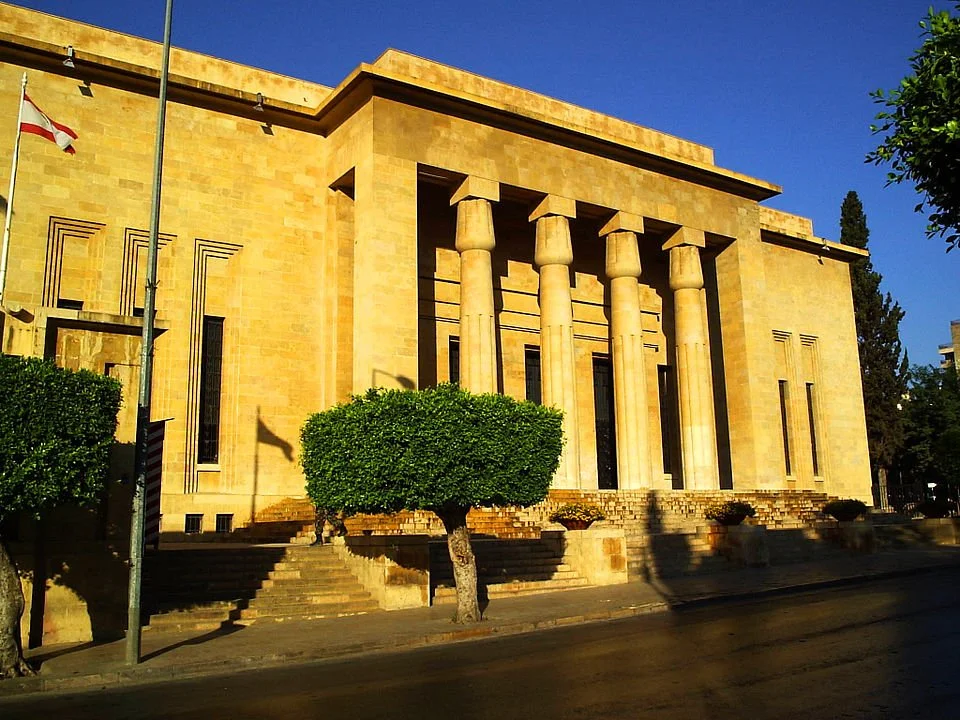
Image credit: https://en.wikipedia.org/wiki/Beirut#/media/File:Beirut_Museum.jpg
How long does it take for a case to go from complaint to judgment?
I have seen cases in Lebanon last for 35 years including appeals, while some take only six months to three years.
For a penal case, the range is three to five years. And for civil or commercial, it might take 12-15 years including appeals through the court of Cassation. For a judgment in the first instance, though, one to four years is typical.
The procedure is a little different than in the United States. If you are talking about civil disputes, the procedure begins when I file the case. The opponent has 15 days to respond, and when he responds, I have 10 days to reply.
This goes back and forth a bunch of times, it could be twice or it could be 10 times; it varies in each case. The judge will not make a decision or take any action unless a party asks the court to please start the hearings. And even then, it may take several hearings to get a court order.
Lebanon has a first instance court, which is like a county court in the United States. After that, a party can appeal to an appeal court, an after that there is the Cassation court, which is derived from the French court system. That court only hears cases, though, when the appeals court judges disagree or when there was an error at the appeals court.
Does Lebanon have specialized courts that only hear commercial cases?
In the north of Lebanon, they have different first instance courts for civil matters, for contract matters, for commercial matters, and for real estate matters. There are also different appeals courts for commercial, real estate, and civil matters. There are six provinces in Lebanon, and each province has its own first instance and appeals courts. But there is only one Court of Cassation for all civil matters, and it is in Beirut.
The judges do not specialize for their whole careers, either. Every five to six years, the judges change. They often switch subject matters.
Who decides the facts in a commercial case—a judge or a jury?
Yes, in the sense that the litigation is paperless and parties may appear through videolink.
Who decides the facts in a commercial case? Is it a judge or a jury?
We don't have juries in Lebanon at all. The facts are presented by lawyers and opponents, and the judge will rule which facts are true.
How is evidence exchanged between the parties before trial? Do you get to interview opposing witnesses before the trial?
The judge will not discuss any document unless the other lawyer disclosed it to the adversary. Judges do not allow surprises, and you can't hide a document you want to use.
But you cannot compel other side to give documents unless they want to use them. There is also no compelling witnesses to interview. The first time you see them may be in court unless the judge says informally to a party to get the witness to answer a particular question. But there is no compelling people to appear; you can just try informally to speak to people voluntarily. Once the witness is in court, of course, you can ask them questions.
Is it true that there are different court systems for different religions?
This is true only for personal disputes, like custody and marriage. Every sect has their own family courts. Penal or administrative matters are not separate.
Do lawyers in Lebanon cite the laws of other countries in disputes?
After World War I, 1920-1943, Lebanon was a French colony. In this time, the French wrote the laws of Lebanon by taking French law and translated them to the Lebanese. So we use French books because the French generally have more written analysis of the law, and to show details a judge can rely on French books. We wouldn't use, say, Italian or U.S. laws, the same way.
What language do legal proceedings take place in?
They are always in Arabic.
Does the losing party in a litigation pay the legal fees of the winning party?
Yes, but judges will award a standard amount for everyone, and it is often much less than what lawyers actually charge. While you can add some extra fees to this number, you usually can't recover the actual amount incurred from an opponent.
Are Lebanese courts open to the public?
Yes, anyone can attend a trial unless there is a family law dispute or it involves an embarrassing issue. In those cases, a party can ask the judge to make it private. Otherwise, all proceedings start with the phrase, "In the Name of the Lebanese Citizens ... "
Do Lebanese courts have a strength for resolving commercial disputes?
2,000 years ago, there was a Roman emperor and jurist named [Emilius] Papinianus. The law school founded by Papinian heavily influenced Roman and modern civil law, with Emperor Justinian calling it Berytus Nutrix Legum (Beirut, Mother of Laws). This phrase, on the city crest today, is also the motto of its Bar Association.
I am proud that we have many of the most intelligent lawyers and judges in the world.
What are their weaknesses?
There is some corruption.
Also, Lebanon needs to enter the digital age. There is a big gap in the Lebanese system between the technology in place and what it should have. On the other hand, I once spoke to a Saudi judge and asked for an introduction to a lawyer. The judge said he didn't know a lawyer because in the Saudi system they don't see lawyers, just online filings. He said this is not like the show Suits, where Harvey Specter could see the judge. So in Lebanon, it would be good if we entered the digital age, but we should not become so disconnected.
Online filings would reduce both corruption and time for litigation. It will reduce corruption because when you file online, no clerk can ask for extra money to expedite your filing.
How often do you go to the courthouse? When you are there, do you need to wear a special robe or wig?
I go once or twice per month, but colleagues in my firm go every day, Monday through Friday.
Lawyers in court have a special robe to wear. Even in Arabic, the term for the robe is "robe."