Litigation in Liechtenstein
Although my friends never tell me their thoughts about Liechtenstein, I assume they must have some. They may wonder if they speak German (they do) or if they have debt (they do not). But if my friends are anything like me (they are in some ways), they probably wonder what litigation is like in this nation of 40,000 people. And while I have not gotten the chance to litigate any cases there, I had the good fortune to speak with Dr. Christian Presoly, an attorney in Liechtenstein, about what litigation is like in his country.
Why should you continue reading this post about litigation in Liechtenstein?
You are concerned that you may confuse this post with my post about litigation in Luxembourg.
You got into a dispute with 40 people in Liechtenstein and are now concerned that a full 1% of the country is mad at you and you need help.
You want to learn more about litigation in German, but you have already read about litigation in Austria and Switzerland.
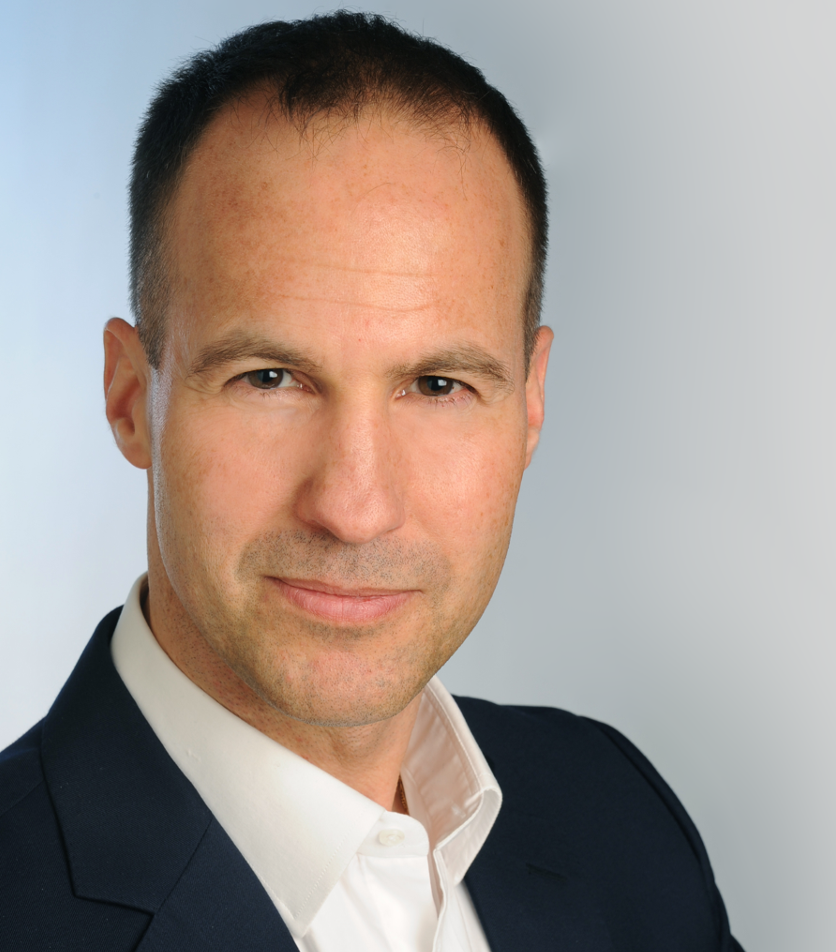
Dr. Christian Presoly is an attorney in Liechtenstein.
Can you tell me about the kinds of disputes you handle in your legal practice?
My main field of expertise is assisting clients in pursuing fraudsters and, where possible, recovering assets that were lost.
What type of clients do you generally represent in disputes?
My clients range from private individuals to larger companies, depending on the case.
Besides Microsoft Office, what software do you use in your practice?
I have been working with Apple products for over 10 years and am very satisfied. I therefore use many Apple applications, a powerful mind-mapping tool, and of course AI solutions for various supporting tasks.
What books and websites do you use for legal research?
I maintain a large library with the main local commentaries on civil and criminal law. In addition, I use online research tools for case law and legal materials, such as ris.net, gesetze.li, and gerichtsentscheidungen.li.
Do litigators in Liechtenstein ever cite the laws of other countries in disputes?
Yes, but as Liechtenstein lawyers we are not permitted to advise on foreign law. In such cases, a lawyer or expert from the relevant jurisdiction is brought in.
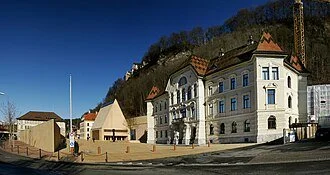
Image credit: https://commons.wikimedia.org/wiki/File:Regierungsviertel_Liechtenstein_2.jpg
Do you electronically file pleadings with the court? Or must you send paper copies of them to the courthouse?
Everything is still filed the traditional way — on paper.
Does Liechtenstein have specialized courts that only hear commercial cases?
No
Liechtenstein has a relatively small population, but it also attracts people and businesses from around the world. Do you find that many disputes in the country have cross-border components? Or do you find that the country has a disproportionate number of lawsuits for the size of its population?
Yes, in fact most lawsuits have cross-border elements, often arising from the financial services sector.
Many wealthy people consider Liechtenstein to be a tax haven. Is it difficult to enforce foreign judgments in Liechtenstein?
It is not straightforward. Liechtenstein has enforcement agreements only with Austria and Switzerland, except in arbitration matters where it has joined an international enforcement convention. In civil proceedings without arbitration, it may therefore be necessary to re-litigate the case entirely in Liechtenstein.
Who decides the facts in a commercial case? Is it a judge or a jury?
It is a judge.
Generally speaking, how many pages are the complaints or initial pleadings you see in your work?
This varies from case to case. If necessary, complaints can be as long as 60 pages.
Generally speaking, how long does it take for a case to go from complaint to judgment?
The duration varies greatly depending on the case and the number of interim proceedings (e.g. challenges to the judge, requests for advance on costs, witness admissions). The length also depends on the extent of evidence taking, such as the number of witnesses, whether international assistance is required, or if local inspections are necessary.
First-instance proceedings can therefore take more than two years; appeals usually add another year per instance. If all levels are involved, proceedings may last up to five years.
Generally speaking, how is evidence exchanged between the parties before trial? Do you get to interview the opposing witnesses before the trial?
The parties exchange written submissions with the relevant evidence attached as exhibits.
If you win, does the other side reimburse your attorneys’ fees?
In principle, yes. However, reimbursement is calculated according to a statutory tariff based on the value of the claim, not on the hourly rate usually agreed between lawyer and client. As a result, the actual reimbursement may be more or less than the fees incurred.
Are the Liechtenstein courts open to the public? Can ordinary people watch a commercial trial?
Commercial trials are generally open to the public. However, the court may exclude the public in special cases where sensitive personal information is involved.
Do you believe that Liechtenstein courts have a particular strength for resolving commercial disputes?
Liechtenstein courts inevitably handle many commercial disputes, particularly due to the country’s trust and fiduciary services sector.
How about a weakness?
The quality of adjudication depends heavily on the individual judge. A further challenge arises when commercial proceedings are combined with criminal cases involving fraud: the economic crime police are understaffed, which often causes bottlenecks and delays of a year or more.
How often do you go to the courthouse?
This depends on the type of case. In civil proceedings, hearings take place intermittently, while in criminal proceedings hearings are held only at the very end — until then, everything is done in writing.
When you are there, do you need to wear a special robe or wig?
For hearings, no special robe or wig is required — business attire is sufficient.