Comments on Recent Cases: November 2025
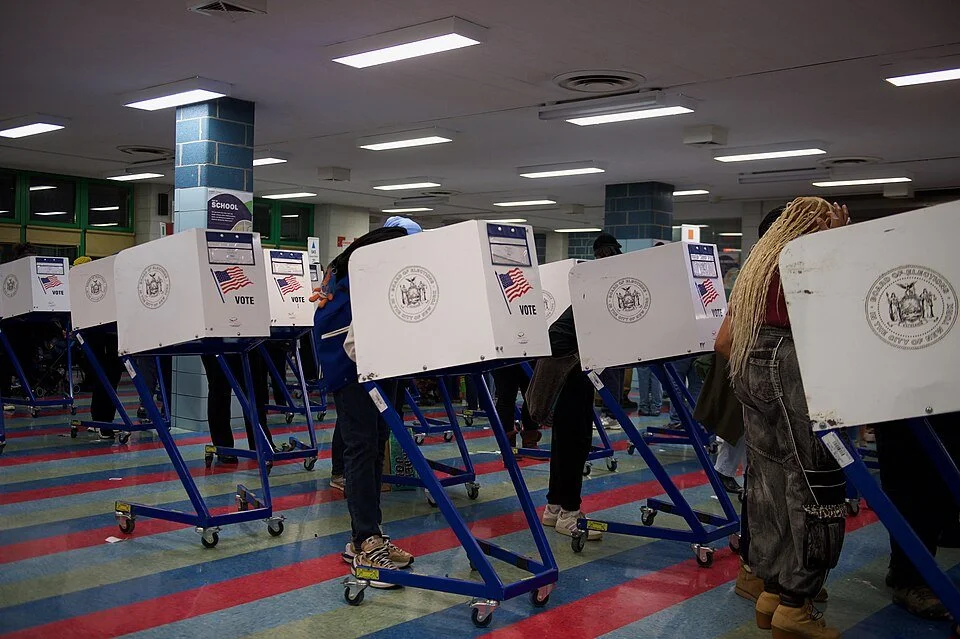
Image credit: https://en.wikipedia.org/wiki/2025_New_York_City_mayoral_election#/media/File:Voters_at_PS_153_November_2025_01.jpg
Part of my work involves reading court decisions to keep abreast of how judges decide the types of cases I handle. Below, I share some thoughts on recent decisions.
Court Declines to Compel Arbitration After Interpreting Arbitration Agreement Itself
When parties agree to arbitration instead of litigation, courts will defer to an arbitrator to make most of the rulings in a case. And while an arbitrator may decide whether the case before her is the kind of case the parties agreed to arbitrate, a court may still decide if any valid arbitration agreement exists.
For example, in a recent case before the state appeals court in Brooklyn, a real estate purchaser sued a seller. The buyers asked the court to require the sellers to arbitrate against them pursuant to an arbitration agreement and argued that the arbitrator should decide any debate about whether the arbitration agreement applied. The court rejected the argument and noted that it is for the court to decide whether an arbitration agreement exists and for the court to decide whether the buyer’s claims came after the expiration of the time limit in the agreement. It ultimately refused to require arbitration after it decided that the buyer did not comply with one of the arbitration agreement’s requirements.
Cases like this illustrate how courts consider arbitration agreements.
Court Dismisses Defamation Claim After Review of Context
A major issue in defamation litigation is whether the defendant’s statement is a lie or whether it is an opinion, which technically cannot be true or false. People who hear something about themselves that doesn’t sound right is often convinced that it is defamation, but there is often complicated legal analysis into the question of whether it is the kind of statement that can be the subject of a lawsuit.
For example, the federal district court in Manhattan recently decided that the rapper Drake failed to state a defamation claim arising from the Kendrick Lamar song “Not Like Us.” The court held that a rap “diss track” was not the kind of forum that listeners expected to hear verified facts. In particular, the court examined the history of “diss tracks” between the two artists to conclude that the context for the statement was not one where the parties were stating facts. While Drake cited various social media user’s beliefs that statements in the song were true, the court held that anyone online could believe anything, but that did not change its analysis of what was a reasonable belief.
I found this case interesting because of the level of analysis the court performed on the underlying facts and context at the motion to dismiss stage rather than permitting the parties to exchange evidence and weighing the evidence at a later stage. But this case illustrates how courts approach defamation claims and the high burdens plaintiffs have to advance beyond a motion to dismiss.
Court Rejects Effort to Modify Release to Permit New Claim
Once a plaintiff executes a release, her claim is extinguished. While a plaintiff may file a lawsuit to assert the claim later on, courts will often dismiss the claim on the basis of the release alone.
For example, in a recent case before the state appeals court in Manhattan, a manufacturer executed a release of a borrower. It then amended the release and then sued the borrower, claiming that it did not release its claim pursuant to the amended release. The appeals court affirmed the dismissal, noting the first release ended the claim and so the second release could not bring it back.
Cases like this illustrate how important it is to consider the effects of a release before executing one.
Court Considers Contract Performance Close Enough
When commercial parties draft a complex agreement, each party should take care to understand its obligations. Any breach could lead to litigation, but it is not necessarily the case that any breach will lead to a loss in court.
For example, in a recent case before the state appeals court in Manhattan, partners to an investment were in a lawsuit. One tried to remove the other, but did so too late pursuant to the terms of their agreement. When one sued in court, looking for a judgment that said the cancellation was too late, the trial court agreed. But the appeals court reversed, claiming that the partner acted close enough to the contractual requirements.
Cases like this illustrate how unpredictable courts can be when determining if a party complied with an agreement.