Litigation in the British Virgin Islands
When most people think about the British Virgin Islands, they likely think about its tropical climate, beautiful beaches, and sailboat harbors. But lawyers may associate the territory primarily with its status as an offshore financial center, similar to the Cayman Islands. People and businesses from the United States establish companies in these nearby islands which are outside of U.S. jurisdiction. With a lot of money moving through accounts held by people who want to avoid scrutiny, disputes are inevitable.
No cruise ship has taken me there yet, but I was lucky enough to speak with Michael J. Fay, the principal of ABVI Law in Tortola, who told me about litigation in the British Virgin Islands.
Why should you continue reading this post about litigation in the British Virgin Islands?
You have a secret offshore trust and are afraid someone is going to sue it.
You want to know if BVI court attire is less formal than in other places because the weather is so nice, or more formal because the territory is British.
You already read my interview with a lawyer who practices in England and Wales and you want to compare the differences between jurisdictions.
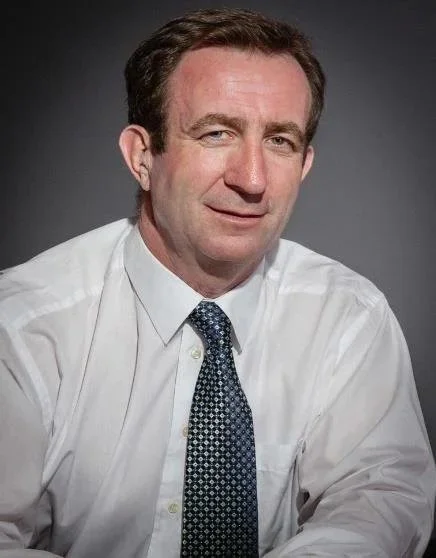
Photo courtesy of Michael J. Fay.
Michael J. Fay is the principal at ABVI Law in Tortola, BVI. This interview was lightly edited.
Can you tell me about the kinds of disputes you handle in your legal practice?
Predominantly shareholder disputes, insolvency, civil actions to recover the proceeds of fraud (often in the context of a shareholder dispute), and some trust litigation. I also undertake BVI real estate disputes.
What type of clients do you generally represent in disputes?
I represent UHNW individuals, family offices, banks and finance businesses, and entities facing insolvency.
Besides Microsoft Office, what software do you use in your practice?
CosmoLex, which is part of ProfitSolv, for time management and billing; web search, typically Google; Microsoft’s Copilot to a limited extent – but no confidential information is available to the AI; and various legal research software.
What books and websites do you use for legal research?
Numerous, far too many to list.
Do you electronically file pleadings with the court? Or must you send paper copies to the courthouse?
Virtually all documents are filed on the court e-portal save for original orders, which have to be delivered by hand.
How long does it take for a case to go from complaint to judgment, and how many pages are initial pleadings, typically?
It usually takes two years – but quicker if a commercial matter is urgent. Many cases are resolved by agreement following the initial interlocutory/injunction/receivership skirmishes. The Statement of Claim, which is the primary document setting out the claimant’s case, is between 10 and 20 pages.
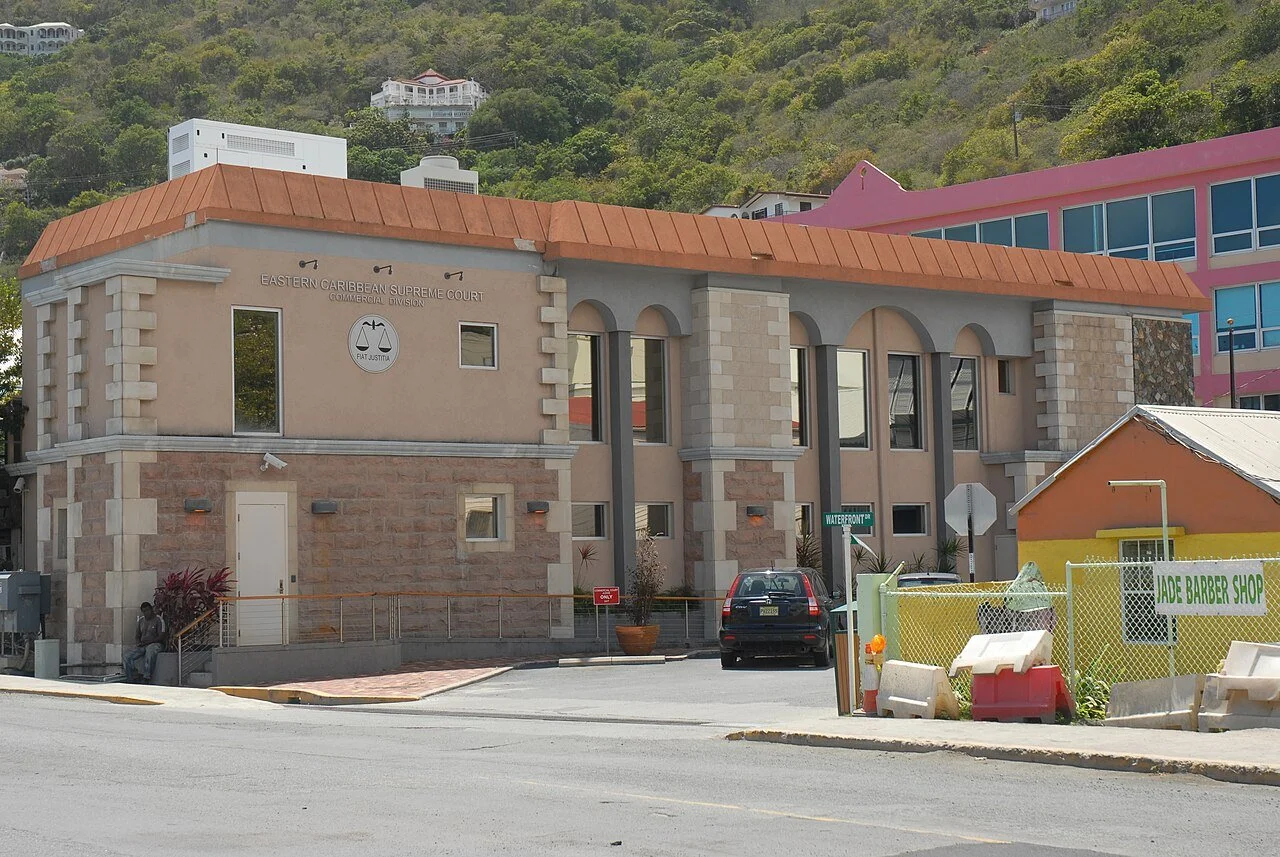
Eastern Caribbean Supreme Court, 2016.
Photo credit: Luigi Rosa, Tortola, British Virgin Islands, CC BY-SA 2.0.
Does BVI have specialized courts that only hear commercial cases?
Yes, there’s the Commercial Court.
Who decides the facts in a commercial case—a judge or a jury?
A judge decides.
How is evidence exchanged between the parties before trial? Do you get to interview opposing witnesses then?
The parties have to exchange witness statements before trial. There is no property in a witness, so you can interview an opposing witness if he is prepared to speak to you, but he is under no compulsion to do so. The BVI does not have oral discovery or depositions of witnesses before trial.
The British Virgin Islands is a British Overseas Territory. How does the BVI court system relate to the court system of England or other parts of the United Kingdom? Do appeals get heard in London? Do you cite laws from other parts of the nation?
The BVI is an Overseas Territory of the UK, but is not ‘part’ of the UK. Each Overseas Territory is its own jurisdiction but is not a sovereign state. The BVI court system is very similar to the UK system. The BVI is part of the Eastern Caribbean Supreme Court (ECSC) – which acts as the court for nine English Common Law jurisdictions and territories in the Eastern Caribbean. Each of the nine has its own High Court registry within the ECSC. Appeals go to the ECSC of Appeal, which sits in the BVI three times a year and more often if required. There is a final appeal to the Privy Council in London. The Privy Council comprises members of the UK final court of appeal.
How often do disputes in BVI courts concern non-residents who do business in the BVI? How often do the disputes involve people or land that genuinely exist in the territory?
Very infrequently in the Commercial Court. There are some BVI land disputes in the BVI High court.
Does the losing party in a litigation pay the legal fees of the winning party?
Yes. The recoverable costs are unrealistically low in the High Court, but much higher in the Commercial Court.
Are BVI courts open to the public?
Yes, save when there are good reasons to proceed in private.
Do BVI courts have a particular strength or weakness for resolving commercial disputes?
It depends upon the quality of the judge, but generally the quality is good.
How often do you go to the courthouse? When you are there, do you need to wear a special robe or wig?
A few times a month. Barristers no longer wear wigs in the BVI Court, but we must wear robes and wing collared shirts with tabs in open Court. Only dark suits are worn in chambers hearings.