Litigation in Guatemala
Guatemala is the most populous country in Central America and the fourth most populous in North America. Its capital city has the largest metropolitan population in Central America. With so many people dealing with each other, disputes are inevitable. But the weather is too hot for me to contemplate a trip to a hot and humid area, even if its vistas are famously beautiful. Luckily, Carlos Rivers, a lawyer and the founder at Rivers & Associates in Guatemala City, was kind enough to talk with me about what litigation is like in his country.
Why should you continue reading this post about litigation in Guatemala?
You’ve read interviews from Argentina (two of them), Brazil (plus a bonus international arbitration interview with a Brazilian lawyer), Mexico (so nice, I talked to them twice), Panama, Paraguay, Peru, and Uruguay, and you’re ready to write your motorcycle diaries.
You’re curious about one of the few countries whose name has more vowels than consonants.
You want to learn about a legal system that has electronic filing, which most of its lawyers do not use.
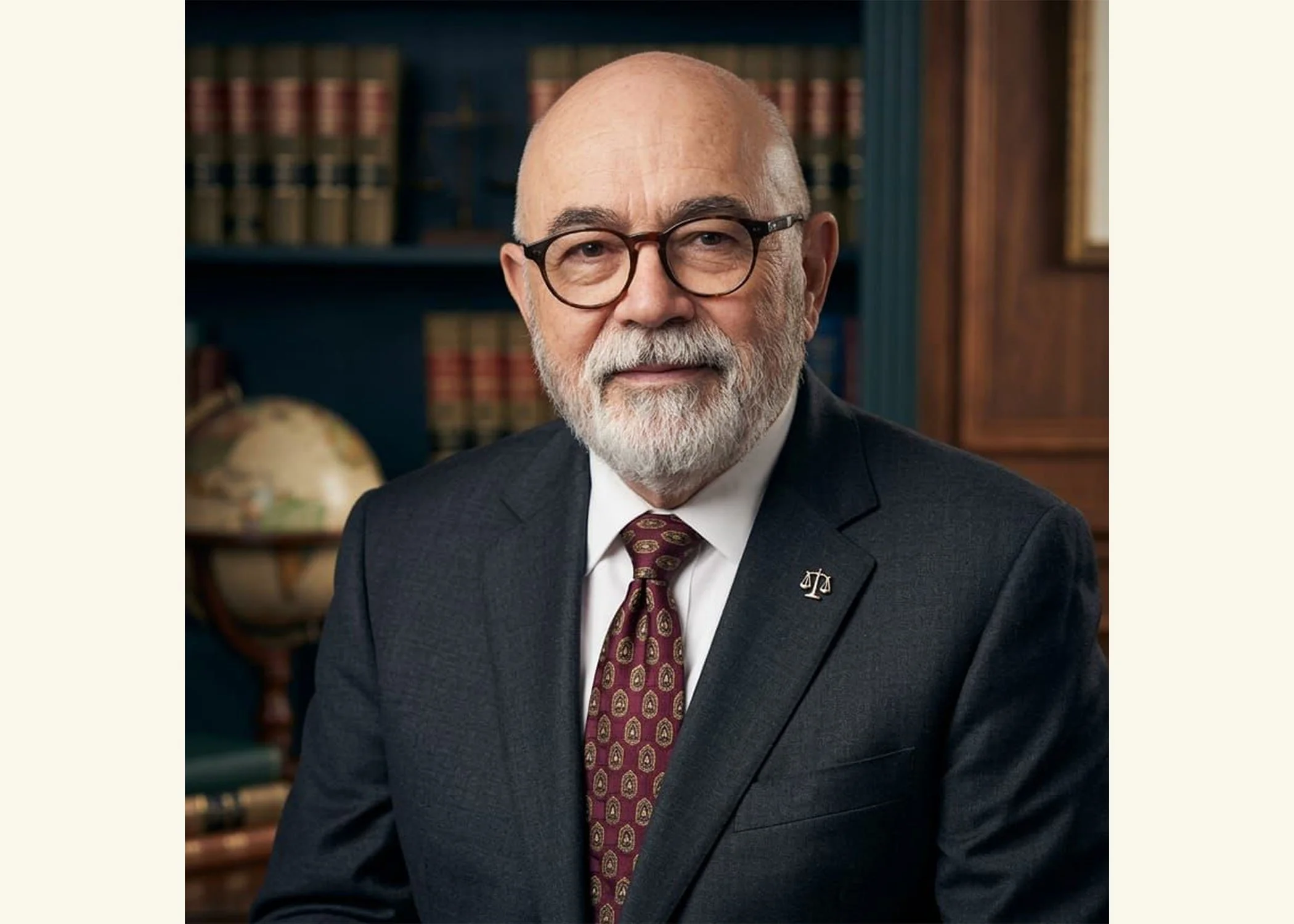
Photo courtesy of Carlos Rivers.
Carlos Rivers leads the Rivers & Asociados law firm in Guatemala. This interview was lightly edited.
Can you tell me about the kinds of disputes you handle in your legal practice?
I have been practicing law for almost 50 years at this point, having started my career as the CEO of Central American law for CMI Holding. My law firm has handled some of the most important cases of our country, so our experience is wide-ranging.
What type of clients do you generally represent in disputes?
We have various types of clients depending on the circumstances. Generally, they are large companies or important people with difficult legal problems. We have given advice to embassies of Japan, Egypt, Chile, and India, among others. In addition to litigation, we do extensive work in real estate and artificial intelligence and large language models, the last of which are completely disruptive technologies. I recently studied AI more in depth at Singapore Management University.
What project are you most excited about working on lately?
The law firm represents for Latin America a new-generation software for banking and finance, Albor, directed by David Cass.
Besides Microsoft Office, what software do you use in your practice?
You would have to ask my IT director!
What books and websites do you use for legal research?
We use any legal texts that may be pertinent to our cases, national or international.
Do you electronically file pleadings with the court? Or must you send paper copies to the courthouse?
Although electronic filings are permissible in some cases, most litigation is still submitted on paper due to cybersecurity concerns for high-profile cases.
How many pages are the complaints or initial pleadings you usually see.
It varies. For example in the case we handled against Chiquita Guatemala, S.A, the initial complaint was 60 pages plus exhibits.
How long does it take for a case to go from complaint to judgment?
Generally, cases take more than two years.
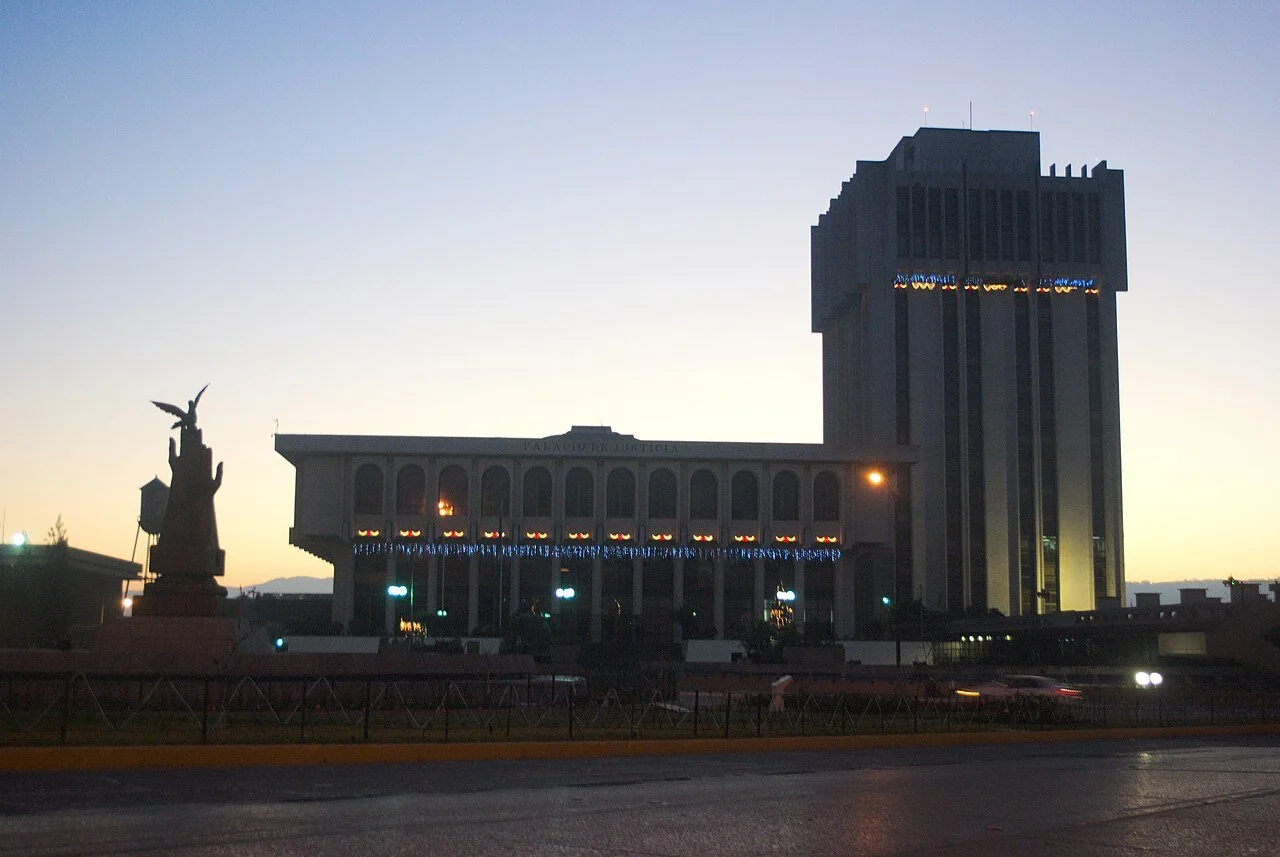
Supreme Court and Peace Monument at dawn.
Photo credit: Josué Goge, Amanecer en ciudad de Guatemala, CC BY 2.0.
Does Guatemala have specialized courts that only hear commercial cases?
Yes, we have the Supreme Court and the Constitutional Court, plus specialized courts for commercial and civil litigation in the judicial system. As a center of trade and technology, Guatemala’s commercial litigation covers a range of topics. I’ve seen this from the development side as well, as I’m advisor on the Interoceanic Corridor, and director of Tecnopark, an industrial hub.
Who decides the facts in a commercial case? Is it a judge or a jury?
A judge will decide commercial cases.
How is evidence exchanged between the parties before trial? Do you get to interview opposing witnesses before the trial?
No, Guatemala doesn’t have pre-trial depositions in the way the U.S. does.
Do lawyers in Guatemala cite the laws of other countries in disputes?
It may happen, but citing comparative law would be an unusual move reserved for exceptional cases.
Does the losing party in a litigation pay the legal fees of the winning party?
Yes, the losing party pays legal fees.
Are Guatemalan courts open to the public?
Generally the courts are not open to the public, but it can happen in certain circumstances. In some cases, you can request that the judge hold a public hearing.
Do Guatemalan courts have a strength for resolving commercial disputes? What are their weaknesses?
People come to Guatemala for the climate, but our legal system’s strengths and weaknesses are common to most of Latin America.
How often do you go to the courthouse?
Most of the attorneys at my firm go at least once a week to work on their cases.