Litigation in the Bahamas
Nowhere can be paradise all the time. While the Bahamas is famous for beautiful weather, parties, music, and the beach, it is also home to about 400,000 people. And those people, all people anywhere, have commercial disputes. I have had the chance to visit the Bahamas a few times and, for the most part, kept myself out of court. So I have not had firsthand experience with its judicial system. Fortunately, Marco Turnquest, a partner at Lennox Paton in Nassau, was kind enough to talk with me about litigation in the Bahamas.
Why should you continue reading this post about litigation in the Bahamas?
You already read my interview with Michael J. Fay from the British Virgin Islands and are interested in learning more about Caribbean litigation.
You already read my interview with Gregory Dolin from Palau and are interested in learning more about litigation in countries with smaller populations.
You already read my interview with Mergen Doraev and Ivan Semenkin from Russia and wanted a change of scenery.
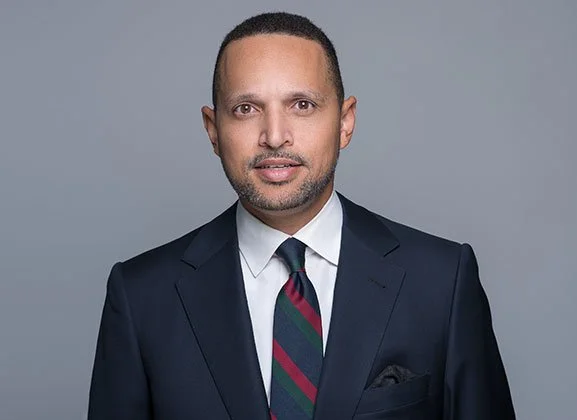
Marco Turnquest is a partner at LennoxPaxton law firm in Nassau, the Bahamas.
This interview was lightly edited.
Can you tell me about the kinds of disputes you handle in your legal practice?
My practice focuses on complex commercial disputes. The subject of these disputes varies. In typical commercial cases, the subject matter often involves breach of contract claims. Banking cases usually mean breach of mandate claims against banks; claims in trust cases often relate to breach of fiduciary duty by trustees or other power holders.
What type of clients do you generally represent in disputes?
The bulk of my clients are banks, trust companies and other large financial institutions. Though, I also represent a number of liquidators, trustees, protectors, receivers and ultra-high-net-worth individuals.
Besides Microsoft Office, what software do you use in your practice?
Docsvault for organising and storing clients’ files, Litera PDF Docs to create, collate and bind documents and Adobe Acrobat Pro.
What books and websites do you use for legal research?
LexisNexis and Vlex are my primary go-to websites for research. I also use Google, other search engines, and AI tools for general research. Additionally, I rely on an extremely wide array of professional books and publications from across the Commonwealth for research.
Do you electronically file pleadings with the court? Or must you send paper copies to the courthouse?
We file all pleadings electronically through the Supreme Court Curia portal.
How many pages are the complaints or initial pleadings you see in your work?
There is no limit on the number of pages for any pleadings commencing an action. However, it is unusual to see a filed claim form longer than twenty pages unless the matter is very complex.
How long does it take for a case to go from complaint to judgment?
A typical commercial claim will generally take two years to go from complaint to judgment. However, if the action is complex, it typically takes two to three years. These timelines assume there are not many interlocutory applications and appeals.

photo credit: Bluerasberry, Supreme Court of the Bahamas in Nassau, CC BY 4.0, 2025.
Does The Bahamas have specialized courts that only hear commercial cases?
The Supreme Court has a Commercial Division, which hears only commercial cases and currently consists of the Chief Justice and three other judges.
The Bahamas includes over 700 islands. How difficult is it for litigants to attend court proceedings?
It is not difficult for litigants, both inside and outside The Bahamas, to attend court proceedings in person, or remotely (e.g., via Zoom) if they cannot travel to the island where the hearing is taking place. Further, the Supreme Court has permanent judges and Registries in both New Providence and Grand Bahama. Thus, litigants have options on where to file their actions and have them determined.
The Bahamas became independent from the United Kingdom in 1973. Do litigants in the Bahamas ever cite English law in their arguments? Is there any connection between the Bahamian court system and the court systems of other Commonwealth countries or Caribbean countries?
Because The Bahamas is such a small country, its case law is limited. As a result, litigants often cite English and other Commonwealth case law in their arguments, as The Bahamas is a common law jurisdiction. This foreign case law is persuasive but not binding on a Bahamian judge. The Bahamas retains the Privy Council in London as its final court of appeal.
Who decides the facts in a commercial case—a judge or a jury?
A judge alone decides the facts in a commercial case.
How is evidence exchanged before trial? Do you get to interview opposing witnesses then?
Parties exchange evidence before trial through a list of documents and witness statements. In appropriate cases, the court can order interrogatories. There is no court mechanism to interview an opposing witness before trial, such as depositions in the USA. Though there is nothing stopping an opposing witness from agreeing to be interviewed before trial, this would be highly unusual.
Does the losing party in a litigation pay the legal fees of the winning party?
Generally, under Bahamian law, the losing party pays the winning party's costs. However, the Court has the discretion to vary this rule in certain cases. For example, if the claimant only won some of the claims it pursued or acted unreasonably in the litigation, the court may reduce its allowed costs or make no order for costs.
Are Bahamian courts open to the public?
Bahamian courts are open to the public. Commercial trials are open to the public, unless the Court orders restricted access, which it does only in cases involving highly sensitive matters.
Do courts in the Bahamas have a particular strength for resolving commercial disputes?
The judges in the Commercial Division of the Supreme Court are very good. These judges have extensive experience handling complex disputes involving multiple parties from different jurisdictions that often center on novel legal issues.
What are their weaknesses?
Although additional commercial judges would be beneficial, budgetary constraints currently prevent this.
How often do you go to the courthouse? When you go, do you need to wear a special robe or wig?
I rarely go to the courthouse today. Practically all interlocutory applications are heard remotely. Trials and civil appeals are now normally held in person. However, it is not unusual for even complex trials and civil appeals, which I am often involved in, to be heard remotely if foreign litigants and counsel are involved. Counsel must wear barrister robes and collars for trials and civil appeals in open court. Wigs are now only required at ceremonial occasions such as the opening of the legal year.