Litigation in Hong Kong
Hong Kong is a unique place. It’s not just that the United Nations notes that it has the highest life expectancy in the world or that it has the influence of the English legal system in a part of China. It is also that this special administrative region, settled nearly 40,000 years ago, has grown to be one of the world’s top financial centers, and so commercial disputes there are frequent, and expensive. I visited a few years ago and, while I ate a lot of amazing food and visited Hong Kong Disneyland, I did not get a chance to see the legal system in action. So to learn more, Kevin Bowers, the principal of Bowers Law Firm, was kind enough to discuss what litigation is like in Hong Kong.
Why should you continue reading this post about litigation in Hong Kong?
You enjoyed reading about Indonesia and want to continue your legal tour of Asia.
You started with Enter the Dragon and ended up binging martial arts movies all weekend, so now you’re planning a pilgrimage to honor Bruce Lee and Jackie Chan, but you know that the real fights aren’t fought with fists, but with legal papers.
You dream of cuddling giant pandas Ying Ying, Jia Jia, and De De.
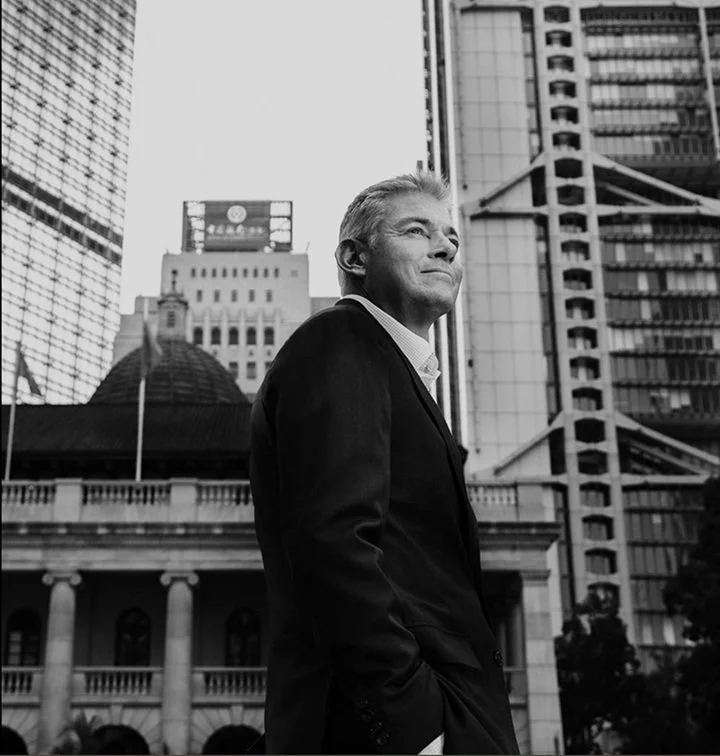
photo credit: Bowers Law website
Kevin Bowers leads Bowers in Admiralty district, Hong Kong SAR. This interview was lightly edited.
Can you tell me about the kinds of disputes you handle in your legal practice?
I specialize in all commercial disputes: shareholder, employment, insurance, trade, debt recovery, asset recovery, and fraud.
What type of clients do you generally represent in disputes?
We represent a range of clients, from shareholders, senior employees, corporations, or partners, to individuals in disputes.
What books and websites do you use for legal research?
For websites, we use a combination of LexisNexis, and Thomson Reuters’s Westlaw and Practical Law.
Do you electronically file pleadings with the court? Or must you send paper copies to the courthouse?
Both. Our court system is still behind the curve on e-filing, but we do now file with iCMS, the integrated Court Case Management System. The Hong Kong court and government departments do, however, still need to kill the fax machine!
How long does it take for a case to go from complaint to judgment?
It usually takes three to four years in the High Court, and longer in the District Court.

The neoclassical Court of Final Appeal from 1900 originally housed Hong Kong’s Supreme Court. On top is a statue of the goddess of Justice modeled after the one on Old Bailey. photo credit: Iming, The Court of Final Appeal of the Hong Kong Special Administrative Region, CC BY-SA 4.0
Does Hong Kong have specialized courts that only hear commercial cases?
Yes. The High Court, which is comprised of the Court of Appeal and the Court of First Instance, has specialist lists including company, shipping and construction. The financial jurisdictional boundary between High Court and District Court is HK$3 million.
Who decides the facts in a commercial case—a judge or a jury?
A single judge usually decides civil cases, unless the cause of action is defamation, in which case the plaintiff may elect to have the case tried before a jury.
How is evidence exchanged between the parties before trial? Do you get to interview opposing witnesses before the trial?
In Hong Kong, we don’t hold depositions the way lawyers do in the U.S. Instead, we mutually exchange witness statements, expert reports, and Lists of documents, which is a disclosure of relevant documents.
Do lawyers in Hong Kong cite the laws of other countries in disputes? To what extent do the laws of the People’s Republic of China, if any, apply?
The Hong Kong courts cite UK and Commonwealth laws (not PRC laws), which are persuasive, but not binding.
Do legal proceedings take place in English or in Cantonese?
Both are official languages, and both can be used for legal proceedings. The parties can elect to have a bilingual Judge, but most commercial cases are conducted in English. If a trial hearing of a case is in one language, the appeal is usually in the same language unless the appellant is granted the ability to switch.
Does the losing party in a litigation pay the legal fees of the winning party?
Generally, yes. The winning party can usually expect to recover about 70% of its actual legal costs from the losing party, subject to enforcement proceedings.
Are Hong Kong commercial courts open to the public?
Yes, members of the public can sit in on a commercial trial, unless one of the parties obtains an anonymity order, or the court directs that the hearing is to be held in private or that there are reporting restrictions.
Do Hong Kong courts have a strength for resolving commercial disputes? How about a weakness?
Hong Kong courts maintain strong judicial independence.
What weakness do they have?
There is a high risk and cost of litigation, and it can take three to four years to get to trial.
How often do you go to the courthouse? When you are there, do you need to wear a special robe or wig?
There are currently only 104 Solicitors Advocate, like me, in Hong Kong for civil cases (out of 11,927 solicitors with active Practicing Certificates). I appear in court a couple of times a week. Robes and a collar and bands are reserved for appearances in open court.
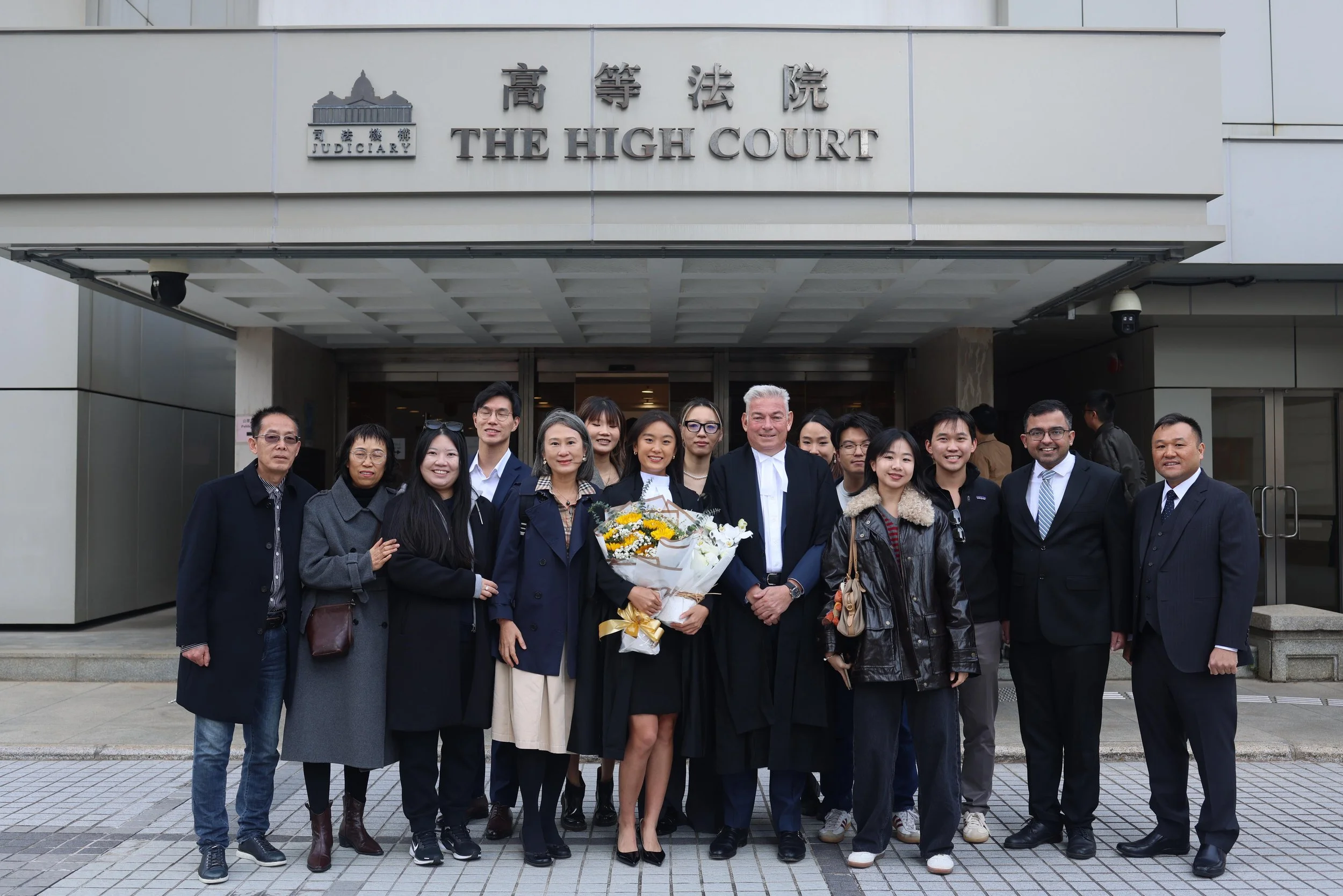
Bowers Law team outside the Hong Kong High Court with Kevin Bowers in court robes.
photo courtesy of Kevin Bowers