Construction Litigation
Every industry has particular issues that arise in litigation, but few have as many as construction. Construction projects involve heavy machinery, so personal injury is one common concern. Additionally, construction disputes typically involve large sums of money, numerous vendors, and detailed, long-term plans. Projects frequently run out of budget or take longer than expected. And since erecting a building is like designing and selling a complex product, defects can arise.
Why should you continue to read this post about construction litigation?
You built a skyscraper, a large gorilla has scaled the side of it, and you just know someone's gonna sue.
You want to read a post with two "-tion" words in the title.
You love the smell of sawdust; you also love the law.
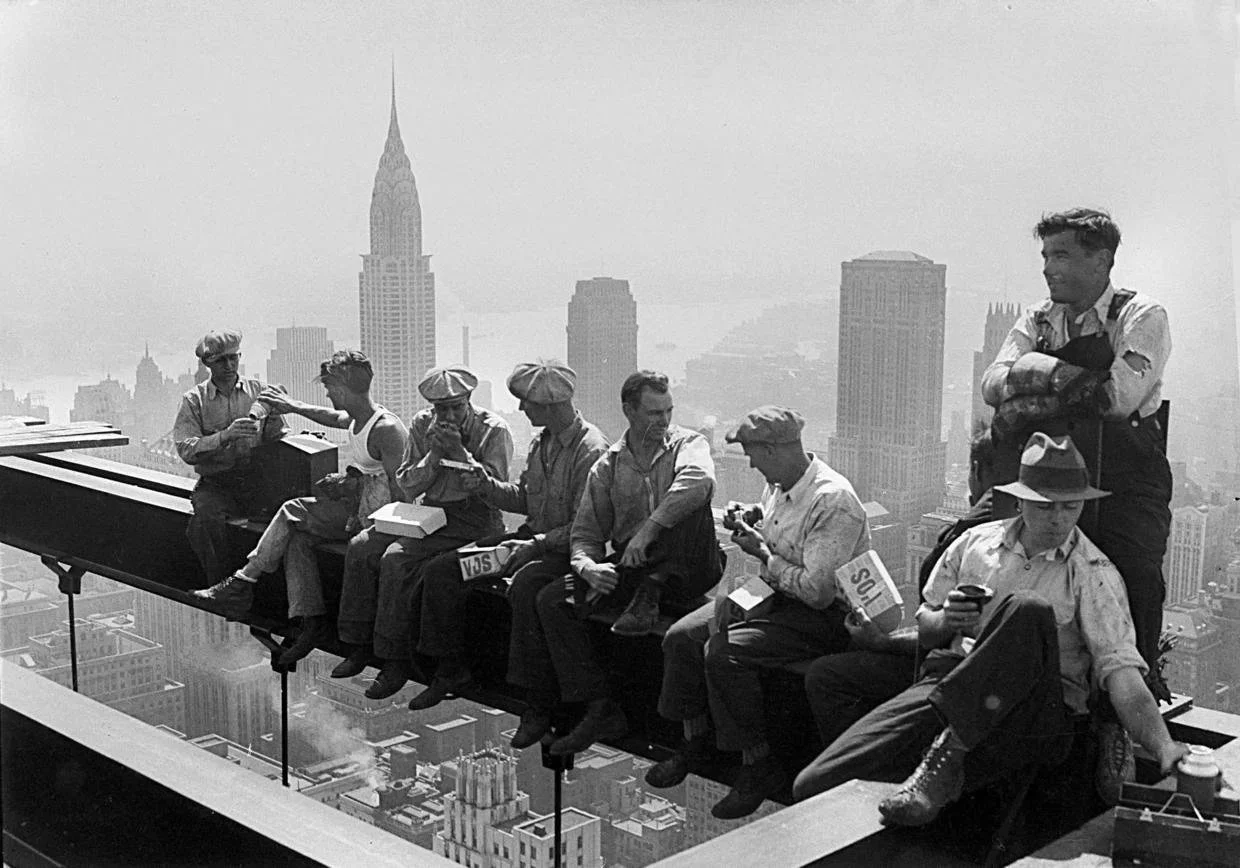
Photograph taken in a publicity shoot organized by Hamilton Wright, Jr. in 1932 at what was known as the RCA Building at 30 Rockefeller Plaza, Photographer unknown., These Hungry Steel-Workers Must Be on a Balanced Diet, public domain Wikimedia Commons.
Contractors and Subcontractors
Construction projects are generally not performed solely by one company. Instead, often a developer builds a project with a prime contractor. The contractor then hires subcontractor companies with electricians, plumbers, welders, carpenters, environmental engineers, landscapers, and so on. When something goes wrong, the developer may sue the contractor, who in turn may sue a subcontractor.
When something goes wrong, there are may be a lot of issues to dispute. Financial disputes over building, by contrast, make for simpler litigation. In the case of a loan, whether a borrower their contract by failing to pay is a binary question. In construction, however, there problems can have multiple causes or an unclear cause at first.
For example, say a wall collapses and causes enough damage for someone to sue the contractor. The contractor can turn to the subcontractor, a mason who built the wall, who may dispute liability. The mason may argue that the subcontractor who built the roof made it too heavy, or that the plumber ruined the wall by installing the wrong kind of pipes for that use. There may be a dispute about whether the problem with the wall happened during construction, or during planning—or if the wall was really a fine one. Maybe the architects or engineers miscalculated the specs for that wall. Maybe the wall would still be standing but for an overwhelming natural event like a tornado, in which case insurance usually comes into play.
It’s no small matter to determine in court who is liable, and many parties’ lawyers may have to cooperate to establish liability.
Getting Paid
Sometimes, people working in construction don't get paid when things fall through. One recourse they have is to seek a lien on the property itself, preventing transactions with the property to proceed until they are paid. They may do this by filing a lien with a clerk, which lien may only be lifted by going to court.
Workers may also claim their employers violated employment laws. These laws include workplace safety or discrimination. Even when a worker is the direct employee of a subcontractor, some laws let them sue a prime contractor or developer for, say, unpaid wages. Accordingly, there may be construction disputes in court.
Unfortunately, construction is also dangerous. Workers sometimes get injured. Generally, workers compensation laws shield employers from liability for personal injury suits so long as the employer has an insurance policy that will cover the injured employee. These policies, however, are not always generous enough to cover the employee’s losses, so employees may sue other parties to collect more compensation. Prime contractors, landowners, and developers are ripe targets for lawsuits, seeking to blame them for the injury. Some statutes may hold defendants "strictly" liable for any injury on a construction site in an effort to incentivize high safety standards.
Often, construction projects run over budget and there are shortfalls. At the scale of a large project, these shortfalls can be huge, leading a development company created for that project to declare bankruptcy. In those cases, litigation helps assign blame. The court can determine where the funds will come from to get people paid while attempting to put the property into the hands of someone who can afford to finish developing it.
Construction projects are usually well insured. But insurance companies want to avoid paying out lots of money, so they may also sue to limit their responsibility for the insured customer.
Standard Agreements
Because many construction projects are similar, contractors use standard agreements. I frequently see agreements developed by the American Institute of Architects. Using a standard agreement is a good idea because different vendors have already studied them and know that they are fair and reliable. They allow the contractors to focus on the specific differences between one project's terms and another without having to re-negotiate standard terms.
One solution that comes up frequently is arbitration. Since many construction disputes arise from issues involving engineering or the realities of life on a construction site, arbitration allows parties to present their disputes to arbitrators who are already familiar with the relevant issues. And since construction projects are often already behind schedule, arbitration's faster timeline may be more efficient than the slow process litigants may face in court.
A Less Formal Environment
One issue that may arise in construction litigation is that there is not always the same paper trail that exists in other commercial disputes. Workers on a construction site don’t all spend their days in front of a computer writing emails. So document discovery may be lighter than in other kinds of disputes. At the same time, relevant witnesses may be uncomfortable expressing themselves in formal depositions or in court or may not retain every note and record the way a large corporation would. This presents a challenge to parties who need to muster claims and defenses for a hearing.
Construction litigation is complex, and parties need lawyers who understand the moving parts that go into creating solid buildings.